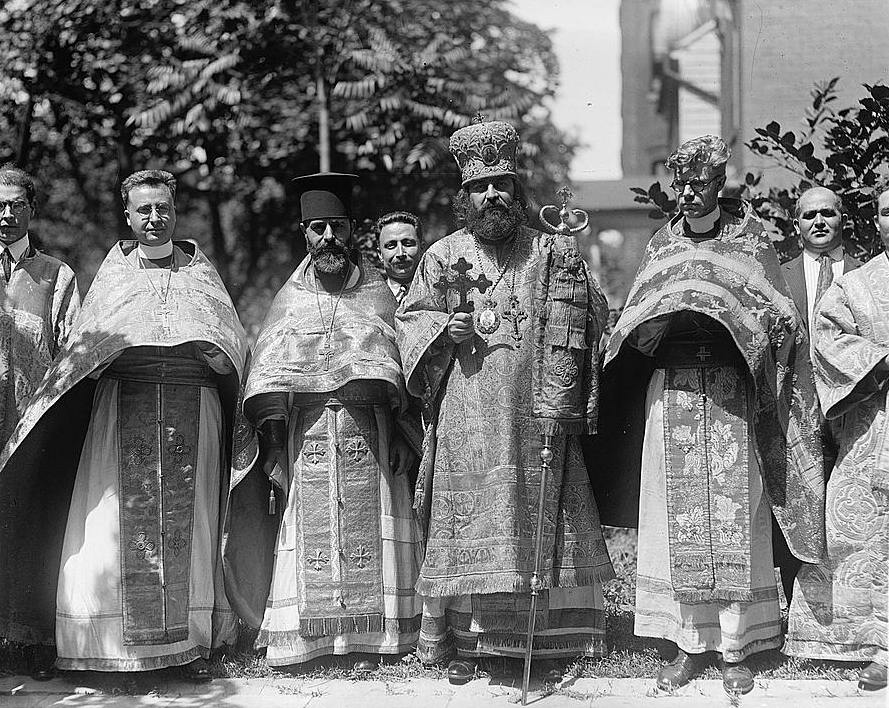
What exactly is the American Orthodox Catholic Church (AOCC)? This question has come up recently, as various groups using that name have become more visible on social media. What is often not mentioned is that there are in fact numerous religious groups using that name (or variations on it), some of them in open hostility to each other, but none of them actually belonging in any way to the recognized, mainstream, canonical Orthodox Church.
They are, to use the term from Roman Catholicism, episcopi vagantes (“wandering bishops”). A major difference between how the Orthodox see such religious groups and how Rome sees them (depending on whether they see a particular group as valid) is that the Orthodox do not have the category of “valid but illicit,” so we do not regard episcopacy as something that can exist without a living relationship to the Orthodox Church.
That said, there are groups that have a historical relationship with the Orthodox Church (e.g., some of the Old Calendarist groups or the Bulgarian church in the early 20th century) that are regarded as being in a state of schism or broken communion that could theoretically be healed given the right conditions. This is not the case with any of the “AOCC” groups, as all of them have their origins in episcopal consecrations performed by people unrecognized as bishops of the Orthodox Church. Apostolic succession ceased to operate before these groups came into being, not just because of the wandering-off of the men at the heads of their ecclesiastical genealogies but also because in many cases, the groups themselves are clearly no longer Orthodox in either their doctrine or worship. In fact, many of them are actually Pentecostals who have added on Orthodox-looking trappings.
That said, they will claim to have apostolic succession, and the basis of that claim relies on the Roman Catholic view of the possibility of holy orders existing indefinitely outside the communion of the Church. So where do these groups claim to get their succession from?
Almost all of them will claim their origins in the 1920s with the emergence of a church body called The Holy Eastern Orthodox Catholic and Apostolic Church in North America, a.k.a. The American Orthodox Catholic Church, which was chartered in 1927 by Archbishop Aftimios Ofiesh, when he was still part of the newly-independent (as of 1924) Russian archdiocese in America.
And who was Aftimios Ofiesh? He was the now much-forgotten (for good reason) successor to St. Raphael of Brooklyn, consecrated by the Russian archdiocese in 1917, two years after St. Raphael’s death.
Because there are so many of these groups, it would be impossible to chart where they all come from and what their relationship is to each other.
I do have an interest in this phenomenon, though, especially those claiming a connection to Aftimios. Why? His career was the subject of my Master of Divinity thesis at St. Tikhon’s Orthodox Theological Seminary, which was completed in 2007. I became interested in Aftimios not because I admired him — indeed, if you know one thing about him, you know that he got married in his fifties to a young woman in her twenties long after his episcopal consecration.
Rather, I found the story he was in the middle of in the wild days of American Orthodoxy in the 1920s and 1930s to be a fascinating one, so I researched him and wrote about him. I not only read every possible document I could find on him but actually did a good bit of travel for archival research which I have never seen cited anywhere else. What was eventually written is, to the best of my knowledge, still the best-researched, most complete, and best-documented narrative on his life, his church work in the United States, and the bizarre, complicated stories he was part of.
Over the years, I have thought off and on about publishing the thesis, but it’s such a niche topic that I know there’s no way anyone would publish it. Also, since I finished it almost twenty years ago, I would need to go back and revisit everything and rework it in some ways. I have found a handful of new sources over the years that I would want to account for. That said, as it stands, I don’t think it contains any major errors (though I did get the death date of Sophronios Beshara wrong based on sources I had at the time; he actually died in 1940), so revisions would be relatively minor. The truth is that I have other projects I want to work on now.
Anyway, I remembered all this as I saw Aftimios’s name pop up on social media recently, including the name used by his church group, and it was such a strange thing to contemplate that the subject of my niche research from twenty years ago should have any currency. One thing I have often noticed is that various photos of Aftimios are being used which I myself discovered in archives and brought out, often by publishing them here on Orthodox History. So if you see a photo of him (or his grave), there’s a good chance I am the person who dug it up somewhere.
So, all of that is to say that I am delighted that people are apparently interested in this strange history. And I would be remiss if I didn’t say here that I think the way some folks present it (especially those in these vagante groups) needs to be set straight.
Well, you made it to the end of this short article, which means that you now get to see what I have only ever shared privately in the past or has been available only in the library of St. Tikhon’s Seminary. So, here for the first time in public, is my 2007 M.Div. thesis:
[UPDATE: Since I’m feeling nostalgic, here’s an interview I gave in 2009 to our website editor Matthew Namee on precisely this subject.]
I hope you find this history as interesting as I do, and even though it is filled with a lot of very bad behavior, reversals and betrayals, it is also filled with some oddly human moments, as well, and (perhaps surprising to some) fills in a lot of the history of the early days of the Antiochian Archdiocese of North America, including the origins of its Western Rite Vicariate.


Leave a Reply